How to Secure Your Online Banking with a VPN in 2026
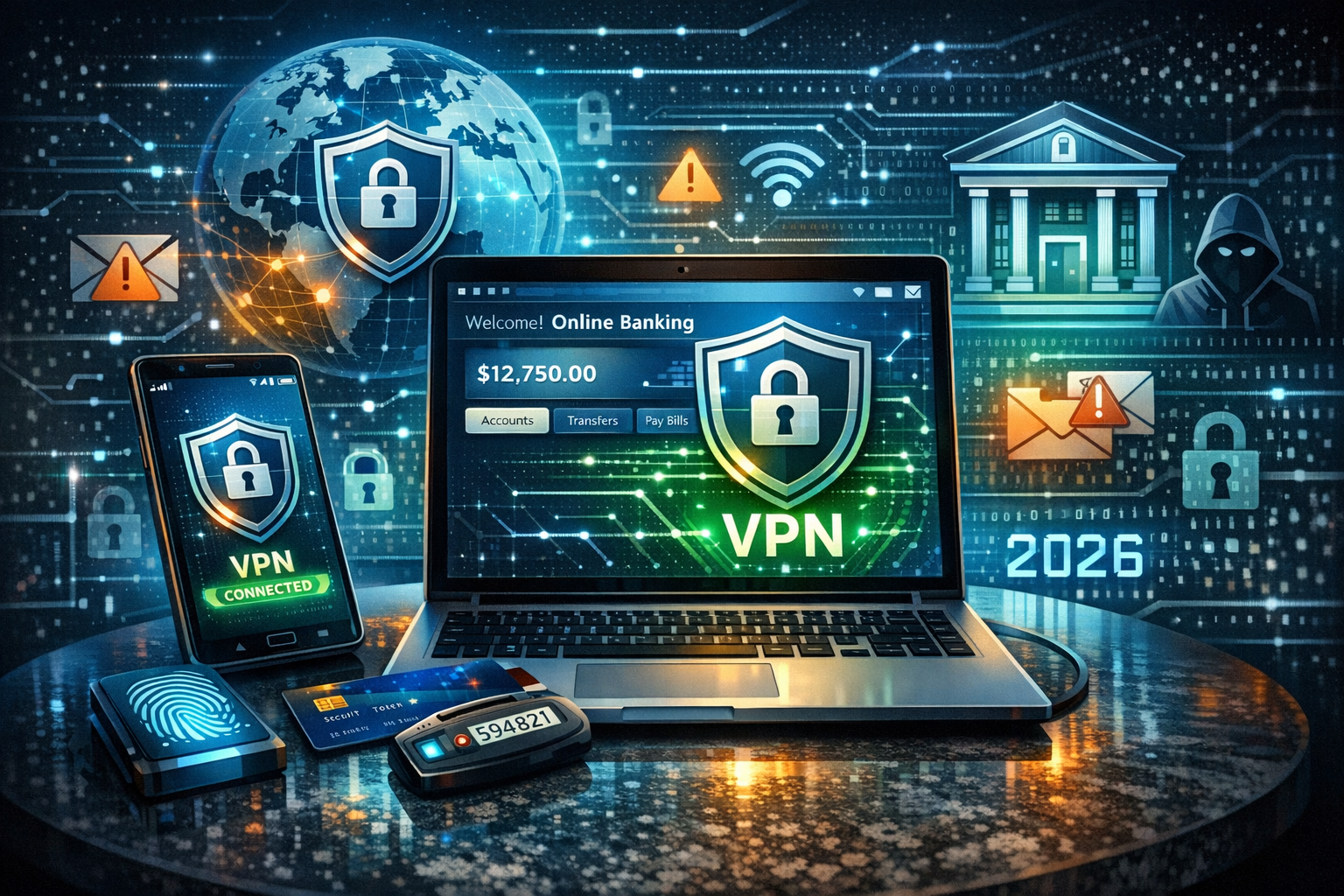
While your bank's app uses standard HTTPS to encrypt communications, this only protects the final destination of your data. If your home network router is compromised, or worse, if you're using a public or shared connection, bad actors can deploy 'packet sniffers' to intercept and isolate your unencrypted financial data packets. Cyber thieves are increasingly targeting mobile banking users, performing man-in-the-middle attacks to steal login credentials and session tokens.
Furthermore, even your Internet Service Provider (ISP) can see the domains you visit. If you want absolute financial privacy and impenetrable security, advanced encryption is an absolute necessity, not a luxury.
The Role of Encrypted Tunnels in Finance
A legitimate, high-tier VPN acts as an impenetrable tunnel for your entire device. By choosing a secure server located in your home country via Surfshark or NordVPN, your bank recognizes a familiar, native IP address. This prevents annoying automated account lockdowns, while simultaneously masking every byte of traffic from external snoopers and hackers. This is military-grade AES-256 encryption applied directly to your mobile device and PC.
Frequently Asked Questions (FAQ)
Can a VPN see my bank passwords?
No. Premium VPNs operate under a strict and audited no-logs policy. They route your encrypted data, but they cannot decipher it due to the bank's end-to-end encryption combining with the VPN's tunnel.
Why did my bank block me when using a VPN?
If you connect to a VPN server in a foreign country, your bank's automated fraud algorithms might flag the login as suspicious. To avoid this, always connect to a VPN server located in your home country before opening the banking app.